QSSR (Quick Spectral Super Resolution) is an AI upscaler for the standard PS5, announced by PlayStation on October 1, 2026 and built with AMD under Project Amethyst. Marvel's Wolverine received it the same day in update 1.002.000, where Insomniac's notes say it is on by default. Digital Foundry found Wolverine showed the biggest gain of the first two QSSR games — more detail and stability, fewer foliage artefacts — at a cost of roughly 1.5–1.8 ms per frame upscaling 864p to 1440p in Performance mode, and about 4.4 ms in Fidelity. On PS5 Pro, Sony still positions PSSR as the better upscaler.
What QSSR actually is
QSSR stands for Quick Spectral Super Resolution. PlayStation announced it on October 1, 2026 as a new "performance tier" of AI upscaling for the base PS5 — the console that until now had no machine-learning upscaler at all. The PS5 Pro has had one since launch: PSSR.
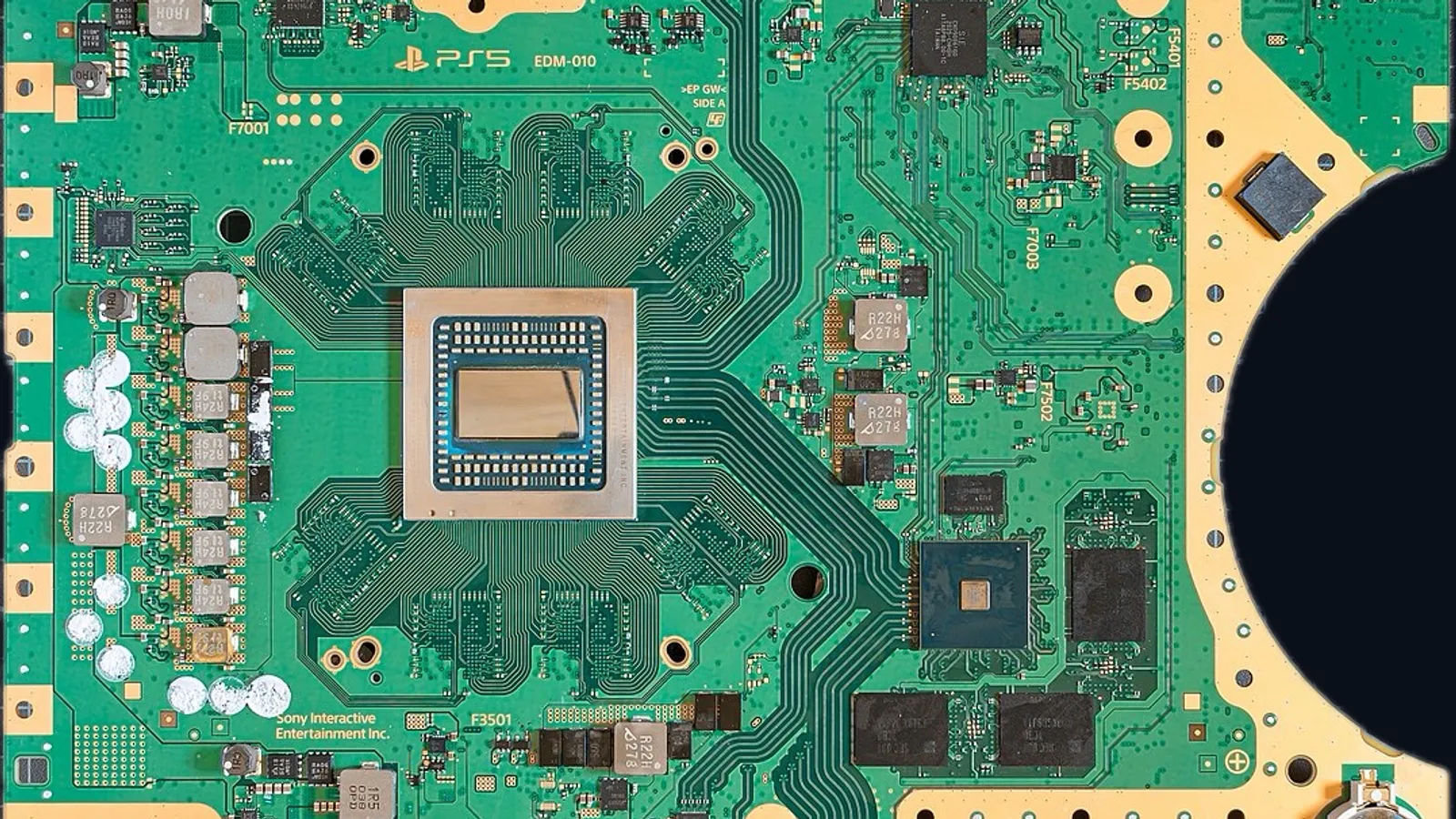
Sony says it came out of Project Amethyst, its graphics collaboration with AMD, and rests on two things: a streamlined neural network architecture, and an implementation hand-tuned to get the most out of PS5 hardware. In plain terms, it is a smaller, cheaper cousin of PSSR built to fit inside the original console's budget.
| QSSR | PSSR | |
|---|---|---|
| Console | Base PS5 | PS5 Pro |
| Announced | October 1, 2026 | With the PS5 Pro |
| Network | Streamlined, hand-tuned for PS5 | Full model, needs Pro hardware |
| Sony's framing | "A new performance tier" | "The gold standard on PS5 Pro" |
| First games | Marvel's Wolverine, Ghost of Yōtei | Many titles |
Daniel Craig, a principal engineer in Sony's Graphics R&D group, has called it "fundamentally a drop-in replacement for titles that already support PSSR", with retrofits needing "perhaps a few days" of tuning — which is why it could arrive in a three-week-old game so quickly.
What changed in Wolverine with 1.002.000
Insomniac shipped update 1.002.000 on October 1, 2026, the day QSSR was announced. The patch notes say the game now uses QSSR on PS5 and that it is on by default — you do not have to find a setting to get it.
PlayStation's announcement describes QSSR as an additional graphics option in both launch games, so there are two ways of reading the same fact: it is selectable, and Insomniac has selected it for you. Insomniac has not published a menu path for switching back, and we have not listed one here until it is confirmed.
Insomniac's line on it was that QSSR "brings a great taste of the PS5 Pro experience to our players on PS5". The rest of 1.002.000 is bug fixes, listed on our patch notes page.
What Digital Foundry measured
Digital Foundry tested both launch games on day one. Wolverine came out ahead: of the two, it showed the larger improvement, while Ghost of Yōtei's gains were described as less dramatic. What improved, in their words: better image stability, more detail, better handling of small sub-pixel elements, and fewer artefacts around moving foliage.
The cost is the part most coverage skips:
| Test | QSSR cost | What it means |
|---|---|---|
| Performance mode, uncapped, 864p → 1440p | ~1.5–1.8 ms per frame more than the previous upscaler | About 8–10 fps lower when the frame rate is unlocked |
| Performance mode, normal 60 fps cap | Absorbed | Dynamic resolution scaling trims internal resolution to hold 60 |
| Fidelity mode | ~4.4 ms | A heavier hit; DF judged 1440p a far more natural target than 4K on base PS5 |
Digital Foundry called the technology's potential "remarkable", noting that low resolution and poor upscaling have hurt many games this generation.
Which mode QSSR suits on a base PS5
The measurements point one way: QSSR is at its best in Performance mode. A 1440p output is the target DF found it most comfortable with, and the 60 fps cap means the extra milliseconds come out of internal resolution, which QSSR is then better at reconstructing. That is close to a free upgrade.
Fidelity is the less clear case. A ~4.4 ms cost is a meaningful slice of a frame, and Fidelity's main appeal on a 120Hz VRR TV was always the headroom above 30 fps — headroom QSSR now eats into. If you were running Fidelity unlocked under VRR, expect it to sit a little lower than it did before October 1.
- 60Hz TV: Performance. It was already the right pick; it now looks better.
- 120Hz VRR TV: try Performance again before defaulting to Fidelity. The gap between them narrowed in Performance's favour.
- Uncapped Performance under VRR: expect roughly 8–10 fps less than before, traded for a cleaner image.
The full mode-by-mode breakdown, including PS5 Pro, is on our best graphics settings page.
If you own a PS5 Pro
QSSR is a base-PS5 technology. Sony's own framing is that "PSSR remains the gold standard on PS5 Pro", and nothing in Insomniac's 1.002.000 notes says the Pro modes changed. Performance Pro and Fidelity Pro reconstruct with PSSR as before.
The practical consequence is that the visual gap between a base PS5 and a Pro in this game is now smaller than it was at launch. It has not closed — the Pro still runs a larger network on dedicated hardware — but Wolverine was one of the strongest arguments for a Pro, and QSSR weakens it.
Why Wolverine got it first
Wolverine and Ghost of Yōtei are Sony's two newest first-party releases, and both already supported PSSR on Pro. Given Craig's "drop-in replacement" description, they were the cheapest possible showcases: the work was tuning, not integration.
Sony says QSSR will be offered to all PlayStation developers. Expect it in other PSSR-supporting games over time, but there is no published list or schedule yet.
A real image upgrade on base PS5, on by default since 1.002.000. Best in Performance mode; costs frames in Fidelity. Pro owners keep PSSR.
Article text draws on the official channels and press reporting listed in the sources below. Where a figure is an estimate or a claim is unconfirmed, the page says so rather than presenting it as fact. Last research pass: October 6, 2026. Official screenshots and comic artwork carry individual source links and rights-holder credits beneath the image. Images labelled as original AI-assisted illustrations are concepts created for this wiki, not official screenshots or evidence of game content. See our material disclosure.
Sources
References and further reading for this article.