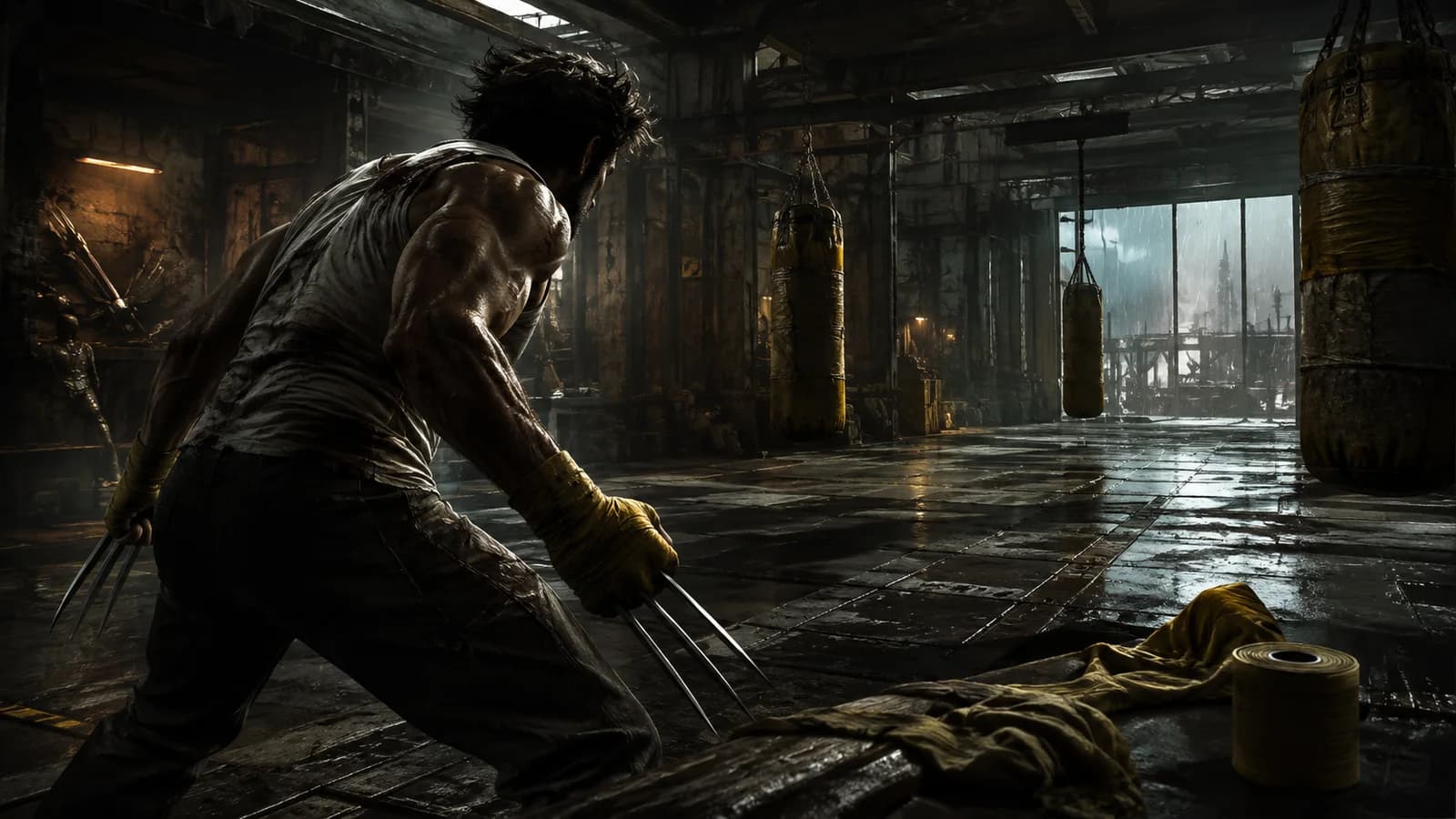
The comparison keeps trending because it is genuinely close on the things fans care about. X-Men Origins: Wolverine Uncaged Edition (2009) still has more explicit dismemberment, a persistent body-damage system where Logan is visibly torn apart and regenerates, and the lunge attack. Marvel's Wolverine (2026) has a far deeper defensive game built on precision parries, two real progression trees, and vastly better presentation — but a more restrained gore system and a weaker Sentinel encounter.

Why this comparison will not go away
It is unusual for a 17-year-old licensed movie tie-in to be the benchmark for a first-party PlayStation release, but here we are — the comparison threads have drawn thousands of upvotes and the side-by-side videos have travelled further than most of the launch coverage.
The reason is specific. X-Men Origins: Wolverine — Uncaged Edition is widely regarded as one of the very few games that got the feeling of being Wolverine right, and it did it in 2009 with a movie tie-in budget. So when a 2026 AAA game revisits the same character, the question is not "is it better made" — obviously it is — but "did it beat the thing 2009 already nailed".
The honest answer is: on some axes yes, on others no.
Feature by feature
| System | X-Men Origins (2009) | Marvel’s Wolverine (2026) |
|---|---|---|
| Dismemberment | Explicit — limbs, decapitations, heavy blood | Present and M-rated, but more stylised and less persistent |
| Logan’s body damage | Persistent — flesh strips away to bone and organs, then regenerates | Not modelled this way; healing is a resource, not a visual state |
| Lunge attack | Yes — signature gap-closer, core to the loop | Closest equivalent is the Savage Sprinter Technique |
| Environmental kills | Impaling enemies on scenery, a headline feature | Yes — kicks launch enemies into hazards and objects |
| Defence | Basic block / evade | Precision parry on L1 — the central mechanic |
| Progression | Single upgrade tree, mostly numeric | Two trees — 36 Techniques plus 25 Adaptations with 10 equip slots |
| Grabs and throws | Grab-and-throw into scenery | Critical Strikes, including co-operative ones with AI teammates |
| Structure | Linear levels with light exploration | Linear chapters with explorable hubs, 14 Nightmare Doors |
| Sentinel fight | Multi-stage skydiving set piece, widely remembered | A conventional arena boss; reviewers found it overlong |
Where the 2009 game still wins
The body-damage system. This is the one nobody has matched. In Uncaged, taking damage physically stripped Logan — clothing shredded, flesh tore away to expose bone, and the healing factor visibly knitted it back together in real time. It communicated invulnerability through spectacle rather than a meter. The 2026 game abstracts healing into the Rage economy instead, which is more interesting to play and far less interesting to watch.
The lunge. Holding a button and launching claws-first across a room is the most Wolverine thing in either game. Savage Sprinter covers similar ground but it is an unlockable Technique competing for a slot rather than a fundamental verb.
The Sentinel fight. Raven built a multi-stage boss that included falling through the sky while tearing a giant robot apart. Insomniac's Sentinel Zero is a health-sponge arena fight that previewers criticised before launch and reviewers criticised after. This is the single clearest loss.
Gore density. Uncaged Edition is genuinely more explicit. The 2026 game is violent and earns its M rating, but it is stylised violence — the monochrome Black, White and Blood presentation at Rage tier three is an artistic choice that also softens the literal carnage.
Where the 2026 game wins
Defence has actual depth. Origins was an offence-only game; you mashed, you healed, you continued. Wolverine's L1 precision parry is a timing system the whole encounter design is built around — one trophy asks for 500 successful parries — and the Extended Parry Adaptation widening that window is a build decision. There is nothing comparable in 2009.
Two real progression systems. 36 Technique nodes and 25 Adaptations with 10 equip slots is a genuine build space, even accounting for reviewers who found it thin. Origins had a flat upgrade list.
The Rage economy. Rage is simultaneously your damage bonus and your health pool — reviving spends it, and running out kills you. That tension does not exist in a game where healing is automatic, and it is the smartest thing either game does with the healing factor.
Presentation. Not close. Liam McIntyre's Logan drew near-universal praise, the three regions are visually distinct, and the technical execution is a generation and a half ahead. Origins was a competent tie-in that looked like one.
The criticism underneath the comparison
The sharpest version of the argument is not about gore at all. It is that the core verbs — claw combos, grabs, environmental kills, a rage state, regeneration — are broadly the same set Raven shipped in 2009, and that 16 years of hardware bought better fidelity rather than new ideas.
That is partly fair. Stealth and enhanced senses are genuinely new, the parry system is a real addition, and the progression is far more substantial. But nobody is pointing at a mechanic in 2026 and calling it unprecedented for the character, and the response to the scent trail suggests some of the new systems were not the ones players wanted.
The counter-argument is that Origins had no defensive layer, no meaningful build variety and no encounter design worth the name. "Same verbs" undersells how differently they are arranged.
The verdict, if you want one
If you want the power fantasy at its most unfiltered, the 2009 Uncaged Edition still delivers something Insomniac chose not to. It is worth playing on PC where it remains available, and the nostalgia is not misplaced.
If you want a modern action game, the 2026 release is better in every craft dimension — combat depth, encounter design, performances, visuals, progression. Its weaknesses are its story and its enemy variety, neither of which Origins was good at either.
The fairest framing is that 2026 built a better game and 2009 built a better Wolverine simulator, and which of those you wanted decides the argument. For whether the new one is worth your money, see our buying guide; for how the systems work in detail, the gameplay breakdown.
Article text draws on the official channels and press reporting listed in the sources below. Where a figure is an estimate or a claim is unconfirmed, the page says so rather than presenting it as fact. Last research pass: September 14, 2026. Illustrations are original AI-assisted concept art created for this wiki, not official screenshots or evidence of unannounced content.
Sources
References and further reading for this article.