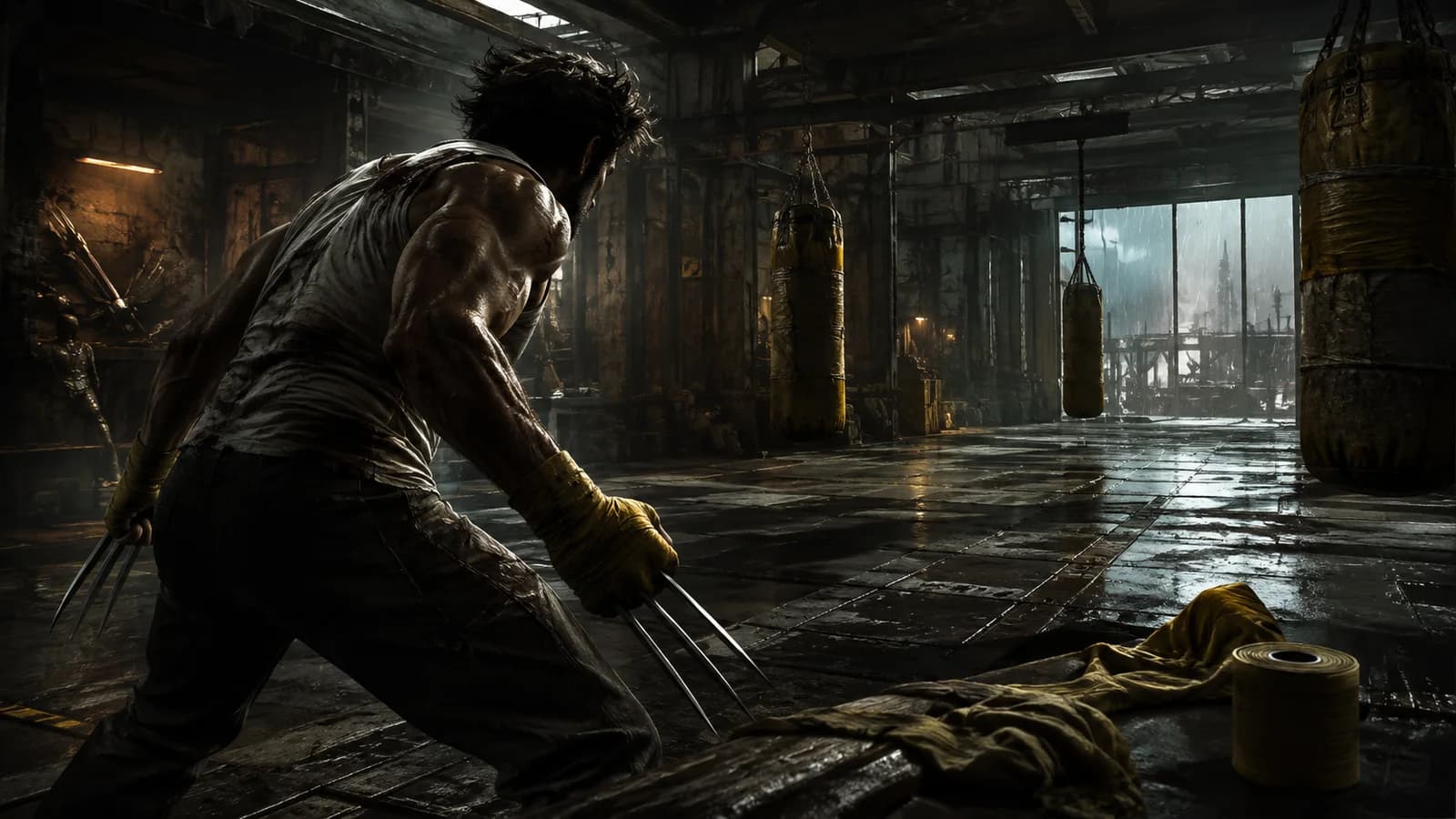
⚠️ Full spoilers from here. Logan's recovered memories reveal that he once served Apocalypse as the Horseman of Death, and the finale brings him to the edge of taking that mantle again. Jean Grey stops it by burning Apocalypse's influence out of his mind — but the psychic fire takes most of his other memories with it. Logan walks away from Jean and the others at the end, amnesiac again, to work out who he is.
Before you read on
This page spoils the ending completely, including the final confrontation, what happens to Logan afterwards, and the two post-credits scenes. It exists because the ending is genuinely confusing on a first watch and the game explains very little of it directly.
If you have not finished, our playthrough structure guide covers the game's shape without spoiling any story beats, and the length page tells you how far from the credits you are.
The reveal: Logan was the Horseman of Death
The memories you recover across the campaign — through whisky bottles and the Nightmare Doors — are not just backstory colour. They are building to one disclosure: at some point in Logan's very long life, he served Apocalypse as the Horseman of Death.
This is drawn straight from the comics, where Apocalypse recruits four Horsemen — War, Famine, Pestilence and Death — and remakes them into weapons. Wolverine's turn as Death is canon there too, which is why the game can treat it as a revelation rather than an invention.
The structural trick is that you learn it roughly when Logan does. His amnesia is not a device to withhold information from the player; it is the subject. Every fragment you collect is him assembling a case against himself.
The finale: he almost takes the mantle again
The climax is not really about defeating a villain. Apocalypse's influence on Logan is still live, and the finale brings him to the brink of becoming Death a second time — willingly.
That is what makes the ending land differently from a standard boss fight. The threat is internal. The game has spent fifteen hours building Rage into a mechanic where healing costs you offence and running out kills you, and the finale cashes that in thematically: the thing that makes Logan survivable is also the thing Apocalypse has a grip on.
What Jean actually does
Jean Grey burns Apocalypse's influence out of Logan's mind. It works. It is also not a clean operation — the psychic fire takes most of his other memories with it.
So the ending is a trade, not a victory. Logan is freed from Apocalypse at the cost of the identity he spent the entire game reassembling. Everything those whisky bottles gave back to him is burned out in the same act that saves him.
This is why the game's collectibles feel heavier than usual in retrospect. You spent the campaign restoring a man's memory, and the ending takes it away again.
Why Jean can do this, and why she has done it before
The second post-credits scene fills in the part the finale leaves implicit: this is not the first time. Jean recounts meeting Logan hundreds of years ago and first burning Death from his psyche back then.
She also explains her own side of it — since that first meeting she has died and been reborn multiple times, like a phoenix, and the two of them have always found each other again.
That detail reframes the relationship from a romance the game did not have time to develop into something cyclical and much older. It also explains a small casting curiosity: some credit listings render Krizia Bajos's role as Phoenix / Jean Grey rather than just Jean Grey. See our voice cast page for the full credits.
Why Logan walks away
With his memory wiped, Logan leaves Jean and the others to go and find out who he is.
Read cynically, that is a reset switch so a sequel can start from the same premise. Read generously, it is the only ending consistent with the character — every major Wolverine story ends with him walking north alone, and the game has just spent its runtime arguing that the memories were never the thing that made him who he is.
It also lands the game's timeline. This story is set before the X-Men exist, so there is no team for him to join at the end. Insomniac confirmed that framing in a Game Informer interview well before release.
What the ending sets up
Two things, and only one of them is in the ending proper:
- Apocalypse. He is never defeated — only evicted from Logan's head. He remains at large and is plainly positioned as the antagonist of whatever comes next.
- Sabretooth. The first post-credits scene puts him on a path that looks a great deal like a Horseman recruitment. Our post-credits breakdown covers both scenes and how to unlock the second.
What the ending does not set up is an X-Men team or a crossover. Despite the shared-universe questions people keep asking, nothing in the finale connects to Insomniac's Spider-Man games.
What to do after the credits
The game does not end at the credits in a practical sense either. Mission Replay from the Nightmare Cabin lets you return to any chapter, and New Game Plus carries your suits, Techniques and Adaptations into a second run with exclusive Techniques and raised caps.
One concrete reason to go back: the second post-credits scene is gated behind earning at least bronze on all 14 Nightmare Doors. If you skipped them, you have not seen the full ending. Our collectibles guide has the cleanup route.
Article text draws on the official channels and press reporting listed in the sources below. Where a figure is an estimate or a claim is unconfirmed, the page says so rather than presenting it as fact. Last research pass: September 14, 2026. Illustrations are original AI-assisted concept art created for this wiki, not official screenshots or evidence of unannounced content.
Sources
References and further reading for this article.